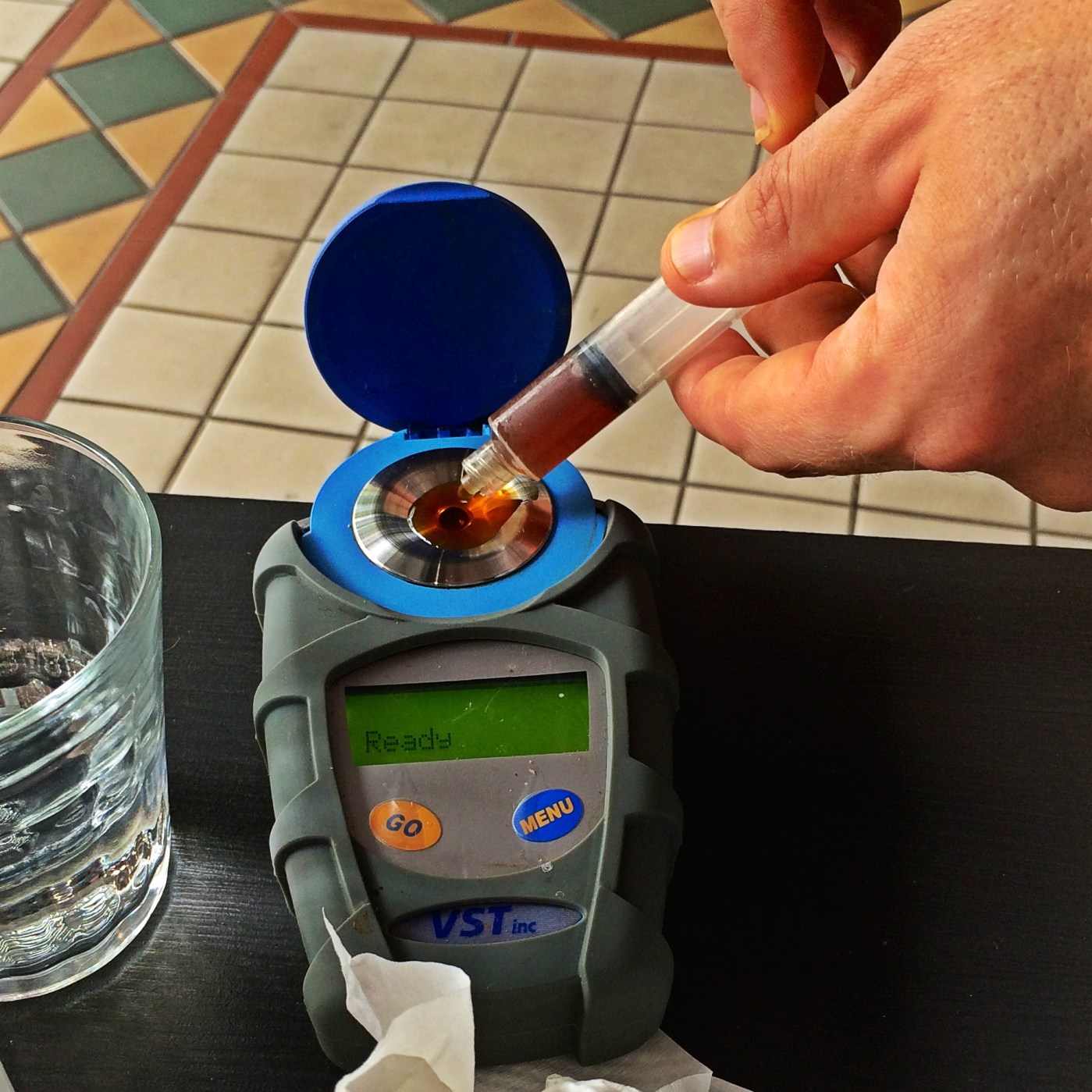
My recent visit to Greenhouse Coffee in Sydney (read more about the visit here) revealed something I wasn’t aware of: even Baristas today got hooked on technology, and here I am not talking about their fancy espresso machines! While discussing with Marcus, the owner of Greenhouse Coffee, about the beans he is using and how he utilises his La Marzocco for preparing great espressos, he all of a sudden got up to get a gadget from the coffee bar. A hand sized, dark grey device with a blue circle and a small display on it, looking very engineery. As he explains this was a coffee refractometer which measures the Total-Disolved-Solids (TDS) in coffee, both filter coffee or espresso. This is done by putting a drop of the actual coffee liquid, onto the device’s lens underneath the blue circular cap, hitting there GO button and letting it do its analysing magic. Moments later a single percentage value appears on the small monochrome display. This value he then punches into the iPhone app “VST CoffeeTools”, along with the amount of water and ground coffee he used to make the espresso. And voila, the device helps to optimise those ratios for future brews, which is to be customised for every bag of beans he receives. Astonishing! Why is that important? Because the coffee-water-ratio as well as the extraction time are crucial to get the right amount of solids out of the beans into the cup. This determines if your coffee tastes flat, sour or bitter.
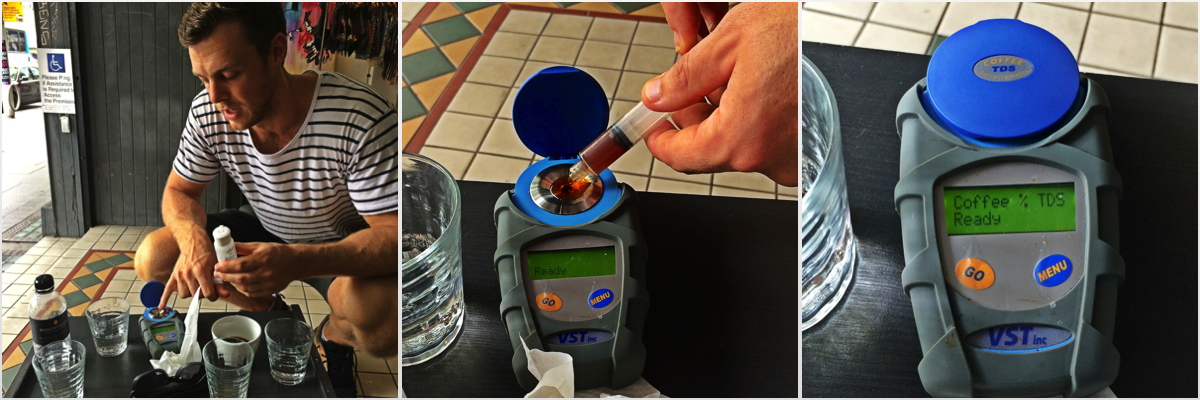
I did some more online research and found the following blog post on that subject I’d like to share for further explanation:
Advanced Coffee Tools: Refractometer and Extract MoJo | Serious Eats
When coffee professionals talk about the success or failure of a particular batch, you might hear them throwing around terms like “TDS” or “extraction percentage.” What they’re talking about is the necessary and related principles of how much coffee flavor is being drawn (or “extracted”) from the coffee grounds, and then how concentrated that soluble coffee material is in the finished drink, which is also known as the beverage’s “strength.” […]
 Stracciatella e Macchiato
Leave a comment